Son Tren

The Last Train (Der letzte Zug)

Movie · 2006 · 15 people

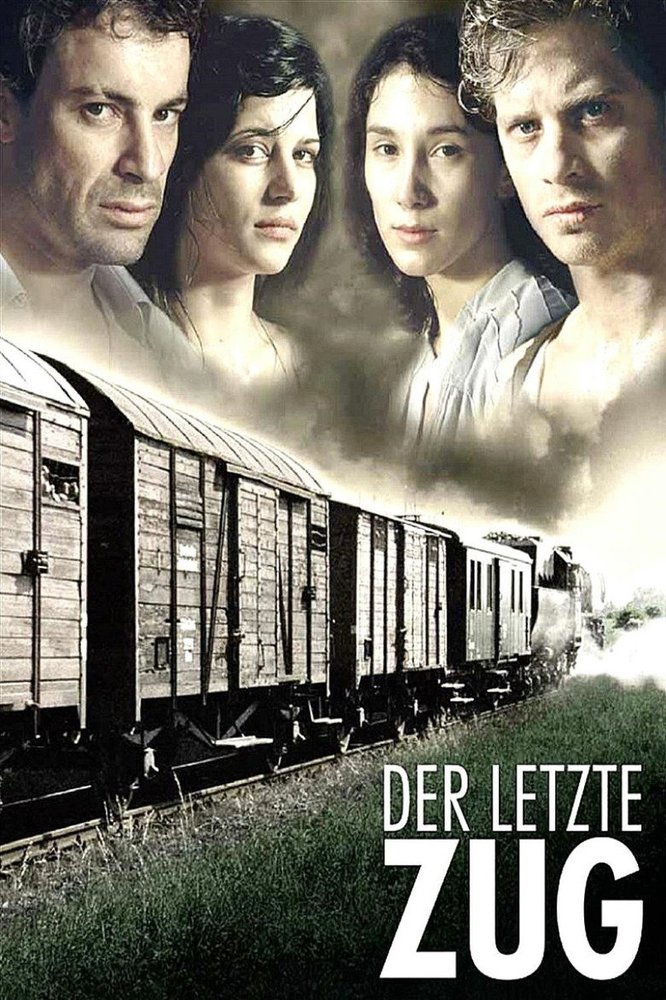
Son Tren (The Last Train; German title Der letzte Zug) is a 2006 German-Czech co-production, a drama that crosses the war and historical genres is in German and runs about 123 minutes. It treats the Holocaust through the fate of a group of the last Jews left in Berlin, and it differs from similar films in its unflinching realism about the brutality of the deportation journey.

The story is set in April 1943, when part of Berlin's Jewish population is gathered at the Grunewald station and put on a train to the Auschwitz concentration camp. Gedeon Burkhard, Lena Beyerling, Lâle Yavaş and Sibel Kekilli lead the cast, the last two being the Turkish actors in it, with Juraj Kukura, Ludwig Blochberger, Stanislav Zindulka, Nina Divíšková and Miroslav Táborský also appearing.

Joseph Vilsmaier and Dana Vávrová co-directed. The screenplay goes back to Artur Brauner, written under a pseudonym, and Stephen Glantz is also credited as a writer. Brauner and Ivo Pavelek produced, and Christian Heyne composed the music. The Spanish release carries the destination in its title, El último tren a Auschwitz.

DirectorDana Vavrova, Joseph Vilsmaier

Reactions

You can pick up to 3 reactions.

Cast

Only cast members with a profile on this site are listed.

Lâle Yavaş Lâle Yavaş Actor · born 1978 Sibel Kekilli Sibel Kekilli Actor · 46 years old Gedeon Burkhard Lena Beyerling Juraj Kukura Ludwig Blochberger Stanislav Zindulka Nina Divíšková Michal Pavlata Vojtěch Kotek Igor Bareš François Göske Miroslav Táborský Boris Hybner Petr Vaněk

Through different eyes

History & Society Lens Asks about the period, the social background and what the work reflects.

There are many Holocaust films; what sets this one apart is that it fits the deportation of the last Jews left in Berlin into a single journey from a station to Auschwitz. Through the people gathered at Grunewald station in April 1943, the film, in my view, quietly but insistently asks how a city could give up its own neighbours. Its real value lies in turning deportation from a statistic into the shared fate of the people in the wagons. With Lâle Yavaş and Sibel Kekilli in the cast, this German-Czech co-production also feels closer to Turkish viewers. Heavy, but a genuine contribution to historical awareness.

Cinephile Looks at script, editing and directing choices; keeps a distance from formula films.

Vilsmaier and Vávrová choose not to soften the brutality of the deportation journey, and that hard, unflinching realism is what sets the film apart from others like it. Keeping the story to a station and a train gives the narrative a claustrophobic unity. But the choice has a cost: across roughly 123 minutes the dose of suffering barely shifts, and instead of building a dramatic arc the film risks playing the same note over and over. Telling the shared fate of a large group also leaves individual characters little room to deepen. The honesty of the realism earns respect, but the structure doesn't vary enough to carry the weight of its material.

Family Viewer Asks whether the whole household can watch it; cares about humour and heart.

This is not one to watch with children. It shows the brutality of the deportation journey openly, which is too heavy for little ones. High-school-age teenagers can watch it with an adult beside them, but it needs talking about afterwards. For a young person who knows the Holocaust only from textbooks it can be a powerful lesson. Grandparents, too, should be ready for some harsh scenes.

These are not reader reviews: they are short editorial takes written from different viewer perspectives with AI assistance. Reader reviews are below.

Reviews (0)

Log in Log in to write a review.

Comments