Once Upon a Time, Cinema

Once Upon a Time, Cinema

Movie · 1992 · 10 people

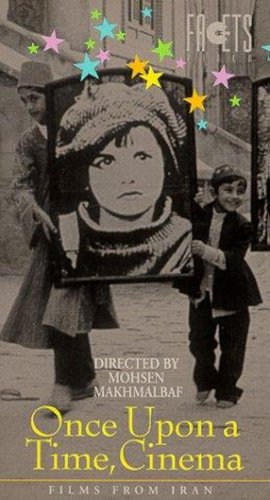
Comedy is the lens through which Once Upon a Time, Cinema tells the history of Iranian cinema, and its form serves that aim: mostly black and white, with a brief color sequence, it weaves in clips from old Iranian films from the silent era onwards. Mohsen Makhmalbaf wrote and directed this 1992 Iranian fantasy comedy, whose Persian title is Naser al-Din Shah, Actor of Cinema.

The story follows the country's first filmmaker, likened to Chaplin, and a Shah who falls in love with a woman in a film he is shown, on a surprising journey that cuts across the history of Iranian cinema. Ezzatolah Entezami plays Nasser al-Din Shah, Mozaffar al-Din Shah and Mash Hasan, Dariush Arjmand plays Amir Kabir, and Akbar Abdi plays Malijak.

Makhmalbaf parodies the conventions of silent slapstick comedy and early fantasy films. Majid Entezami composed the music. The film was nominated for best film and best director at the tenth Fajr Film Festival, and was chosen as one of the best films in Iranian cinema history in a poll of critics and writers by Film magazine.

DirectorMohsen Makhmalbaf

Reactions

You can pick up to 3 reactions.

Cast

Names without a link have no profile here yet.

Morteza Ahmadi Morteza Ahmadi Actor · died at 90 Ezzatolah Entezami Dariush Arjmand Fatemeh Motamed-Arya Mahaya Petrosian Mehdi Hashemi Mohammad-Ali Keshavarz Jahangir Forouhar Parvaneh Masumi Akbar Abdi Malijak

Through different eyes

AI-assisted editorial takes written from different viewer perspectives. They are not reader reviews; those are below.

Cinephile Looks at script, editing and directing choices; keeps a distance from formula films.

Once Upon a Time, Cinema's great achievement is fitting its form exactly to its subject. A film about the history of Iranian cinema carries that history in its own texture: mostly black and white, a brief color sequence, and clips from old films from the silent era onwards. Makhmalbaf doesn't just imitate the conventions of silent slapstick and early fantasy films; he plays with them to say something about cinema itself. Ezzatolah Entezami taking on three roles is part of the same playful design. That is also where the difficulty lies: much of the quotation and allusion may stay half-closed to anyone unfamiliar with Iranian cinema. Its place among the country's best in Film magazine's poll comes as no surprise; for those who know Iranian cinema, those allusions are the film's real pleasure.

History & Society Lens Asks about the period, the social background and what the work reflects.

What's clever about the film is that it tells cinema's arrival in a country through the court and through power. A Shah who falls in love with a woman in a film he is shown makes a comic but thought-provoking point: power, too, can fall under the spell of images. Placing historical figures such as Naser al-Din Shah, Mozaffar al-Din Shah and Amir Kabir inside a comedy offers a playful, skeptical distance from official history. The film thus reads Iran's encounter with modernity through cinema's own story. For viewers without the history, though, this layer is easy to miss; the film makes little effort to explain its background.

Family Viewer Asks whether the whole household can watch it; cares about humor and heart.

The silent-film style physical comedy may amuse young and old up to a point. But the film is largely black and white and packed with clips from old Iranian films. You need some knowledge of cinema and history to catch the references. Children may get bored after the first half hour. It suits film-loving adults and curious teenagers better.

Reviews (0)

Log in Log in to write a review.

Comments