Mayerling

Mayerling

Movie · 1968 · 3 people

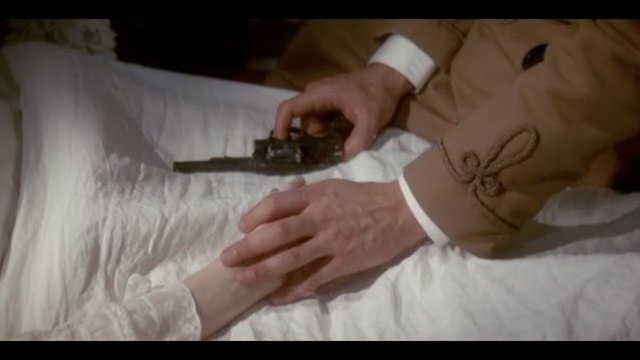
Mayerling is a 1968 French-British romantic tragedy written and directed by Terence Young. It tells of the forbidden love between Crown Prince Rudolf, heir to the Austro-Hungarian throne, and Maria Vetsera, and of the painful end that became known as the Mayerling incident. Running about 140 minutes, it is a historical drama made jointly by France and the United Kingdom, and it was first shown on 19 September 1968.

At its centre is the relationship between Rudolf, weighed down by court intrigue and political pressure, and the young Maria. Their story ends in dramatic fashion at a hunting lodge. Omar Sharif plays Rudolf and Catherine Deneuve plays Maria Vetsera. James Mason, Ava Gardner, Geneviève Page, James Robertson Justice and Andréa Parisy appear in supporting roles, and the cast also includes Maurice Teynac, Véronique Vendell, Béatrice Romand, Howard Vernon and Ivan Desny.

The screenplay is the joint work of Terence Young, Joseph Kessel and Denis Cannan. It draws on Claude Anet's novel of the same name, Michel Arnold's novel L'Archiduc and Anatole Litvak's 1936 film Mayerling, which had already dealt with the real incident. Les Films Corona and Winchester made the picture, and Metro-Goldwyn-Mayer distributed it.

DirectorTerence Young
Production companyLes Films Corona

Reactions

You can pick up to 3 reactions.

Cast

Only cast members with a profile on this site are listed.

Through different eyes

Yeşilçam Nostalgic A viewer raised on the classics, looking for warm storytelling and strong acting.

Some love stories you watch even when you know how they end, and Mayerling is one of them. Omar Sharif's sorrowful Rudolf and Catherine Deneuve's delicate Maria carry two souls trapped amid court intrigue with real grace. Masters like James Mason and Ava Gardner in supporting roles lend it the dignity of the great old productions. For an eye raised on the classics, this is a familiar, warm world of costume and slow-burning feeling. Just come ready for sorrow: it is a tragedy, and it is told as one.

Cinephile Looks at script, editing and directing choices; keeps a distance from formula films.

Terence Young returns to an incident Anatole Litvak had already filmed in 1936, and the earlier film's shadow never quite lifts. The script blends the novels of Claude Anet and Michel Arnold, co-written with Joseph Kessel and Denis Cannan, and that many-sourced structure leaves the film unsure whether it wants to be a love story or a portrait of court politics. At about 140 minutes it sags noticeably in the intrigue scenes, and the rhythm scatters just where the emotion should tighten. Deneuve's restrained performance still stands out within the conventions of costume drama. Handsome but overlong, elegant but at times lifeless.

History & Society Lens Asks about the period, the social background and what the work reflects.

The Mayerling incident is a real historical tragedy, and the film reads it first and foremost as a forbidden love. Rudolf's suffocation under court intrigue and political pressure is sketched in the background; the weight of being heir to the Austro-Hungarian throne conveys a court world of rigid rules. Still, the viewer is left more with a romantic legend than with history's complicated questions. It is an interesting example of how international co-productions of the 1960s looked at the past; anyone wanting to understand the event itself should treat the film as a starting point, not the only source.

These are not reader reviews: they are short editorial takes written from different viewer perspectives with AI assistance. Reader reviews are below.

Reviews (0)

Log in Log in to write a review.

Comments