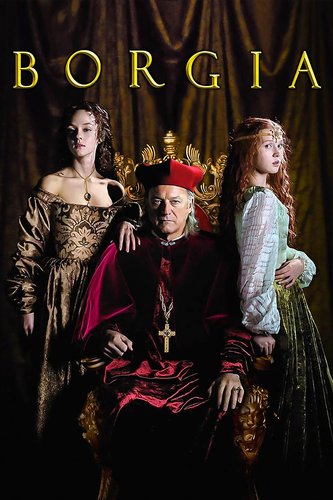
Borgia

Borgia

TV Series · 2011–2014 · 15 people

Tom Fontana created the historical drama series Borgia (also known as Borgia: Faith and Fear) for Canal+, ZDF, ORF and Sky Italia. A co-production of France, Germany, the Czech Republic and Italy, it was filmed in English, 52 minutes per episode. It tells how the Borgia family rose in the Renaissance and came to dominate the Papal States. Co-financed by ZDF and ORF, it is seen as a rival to the Jeremy Irons series The Borgias.

At the centre is Rodrigo Borgia, elected Pope Alexander VI in 1492 and played by John Doman. It dramatises the fates of the family's four best-known members: the father, who wants the papacy, and his three illegitimate children Juan, Cesare and Lucrezia. The cast includes Isolda Dychauk, Art Malik, Mark Ryder and Marek Vašut, with guests such as Iain Glen, Tom Wlaschiha and Philip Arditti.

It debuted on Sky Italia on 10 July 2011 and on Netflix in North America on 2 October 2011. Season two reached Canal+ in France on 18 March 2013 and the third and last season on 15 September 2014, with the 38th and final episode airing on 27 October 2014. Directors include Oliver Hirschbiegel, Metin Hüseyin and Christoph Schrewe, and Tom Fontana, Susanna Styron and Audrey Fouché wrote it.

DirectorOliver Hirschbiegel, Metin Hüseyin
NetworkCanal+

Reactions

You can pick up to 3 reactions.

Cast

Only cast members with a profile on this site are listed.
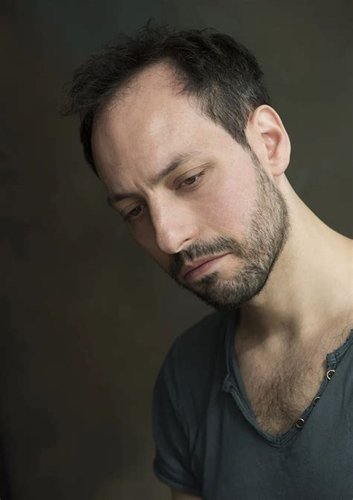
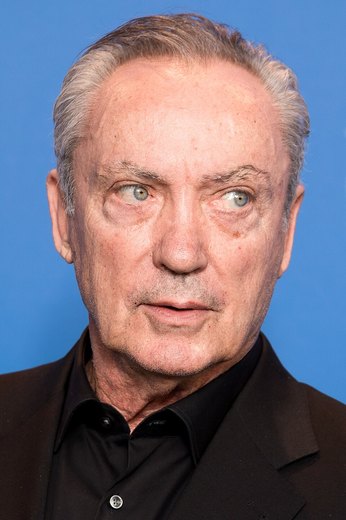
Philip Arditti Philip Arditti Actor · born 1979 Udo Kier Udo Kier Actor · died at 81 Mark Ryder John Doman İzolde Daycuk Art Malik Adam Mišík Miroslav Táborský Marek Vašut Karel Dobrý Jiří Ornest Jiří Mádl Robert Nebřenský Tereza Ramba Ondřej Novák
Through different eyes

Series Binger A series devotee tracking character arcs, cast chemistry and season pacing.

Three seasons, 38 episodes, 52 minutes each: plenty of room to tell the Borgias' rise without hurrying. The real engine of the show is the relationships between the father, Rodrigo, who wants the papacy, and his three children Juan, Cesare and Lucrezia; four intertwined fates give it enough character arcs for a long run. Still, it is a serious time investment. Anyone who has seen the Jeremy Irons series The Borgias may find familiar events feeling like a rerun at times; for those who enjoy comparing, it offers a second take on the same family.

History & Society Lens Asks about the period, the social background and what the work reflects.

Borgia looks at the system of power behind the Renaissance's glittering artistic face. The story of Rodrigo Borgia, elected pope as Alexander VI in 1492, portrays a time when the Church was also a political and economic power centre. One family coming to dominate the Papal States is a picture of a world where kinship counted for more than institutions. The roles the illegitimate children take on within that order also offer a good way into the period's ideas of family and legitimacy. That four countries co-produced it suggests the subject is seen as part of Europe's shared history.

Cinephile Looks at script, editing and directing choices; keeps a distance from formula films.

Created by Tom Fontana, Borgia shows both the strength and the limits of European co-productions. Sharing episodes among different directors such as Oliver Hirschbiegel, Metin Hüseyin and Christoph Schrewe makes stylistic unity harder to keep across three seasons, so expect shifts in tone from one episode to the next. Shooting in English makes sense for the international market, but the acting traditions of a cast drawn from four countries may not always blend. The dramatic structure is solid all the same: keeping papal ambition and the fates of the three children on one axis naturally generates the conflict a long narrative needs.

These are not reader reviews: they are short editorial takes written from different viewer perspectives with AI assistance. Reader reviews are below.

Reviews (0)

Log in Log in to write a review.

Comments