The Little Bather

The Little Bather (Le Petit Baigneur)

Movie · 1967 · 15 people

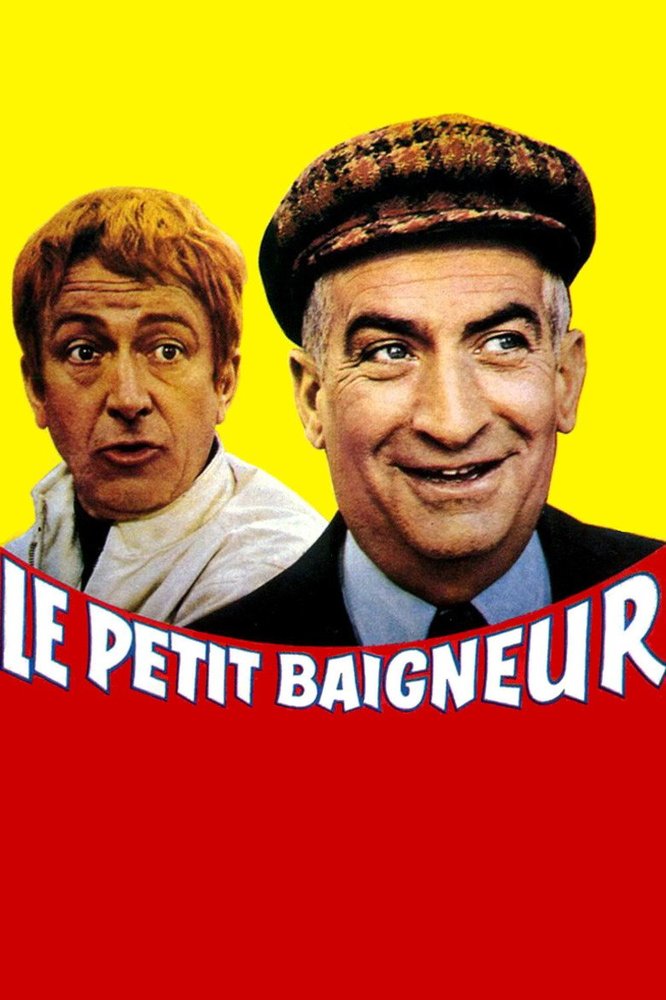
A Franco-Italian comedy from 1968, Le Petit Baigneur (The Little Bather) was directed by Robert Dhéry. It was Dhéry's fifth feature as screenwriter and actor, and is best known for starring Louis de Funès. Shot in French, it runs 96 minutes, and members of Dhéry's troupe Les Branquignols appear in it. Internationally it has been released as The Mad Adventures of the Bouncing Beauty, in West Germany as Balduin, der Trockenschwimmer and Der kleine Sausewind, in Spain as Sálvese quien pueda and in Italy as Si salvi chi può.

De Funès plays Louis-Philippe Fourchaume, owner of the shipbuilding firm that bears his name, a man who hates water and boats but loves money. His gifted designer André Castagnier (Dhéry) draws a modern yacht called Le Petit Baigneur, from which Fourchaume expects a fortune. When the launch ends in disaster, the furious boss hacks the yacht apart with an axe, destroys the plans and fires the designer, only to realise his mistake when orders start pouring in. Andréa Parisy plays Marie-Béatrice Fourchaume, with Michel Galabru and Jacques Legras also in the cast.

It opened in West German cinemas on 22 May 1968.

DirectorRobert Dhéry

Reactions

You can pick up to 3 reactions.

Cast

Only cast members with a profile on this site are listed.

Michel Galabru Michel Galabru Film actor · died at 93 Jacques Legras Jacques Legras Actor · died at 82 Louis de Funès Franco Fabrizi Pierre Dac Pierre Tchernia Andréa Parisy Robert Dhéry Henri Génès Gérard Calvi Claude Darget Colette Brosset Georges Adet Georges Bever Hélène Dieudonné
Through different eyes

Family Viewer Asks whether the whole household can watch it; cares about humour and heart.

The story is simple enough for children to follow: a boss who hates water but loves money wrecks, with his own hands, the yacht that would make him rich. The comedy comes from his over-the-top temper and panic. Being an older film, it may test little ones used to fast cartoons. But as something to laugh at together with grandparents and the whole family, it is a pleasant choice.

Cinephile Looks at script, editing and directing choices; keeps a distance from formula films.

Robert Dhéry is both director and, as the designer Castagnier, in front of the camera, and the film leans on the contrast between a highly strung boss and a gifted designer. That is the right comic choice: the friction between temper and talent drives the gags. Having members of the Les Branquignols troupe in the cast promises the easy ensemble play of a stage company. In my view the limit lies in the structure. All the comedy rests on one irony: the boss destroys the very design that would make his fortune and only later sees his mistake. One-idea plots like this sag the moment the rhythm drops, which is why the film rides so heavily on de Funès's always-about-to-explode energy.

History & Society Lens Asks about the period, the social background and what the work reflects.

The conflict at the heart of the film carries a sharp observation about employers and employees. Fourchaume runs a shipyard that bears his name, yet he loves neither the sea nor boats; profit is all that interests him. The designer, who stands for creative work, is shown the door at the first setback. The boss realising his error only once the orders pour in reads as satire of a mindset that sees the worth of someone's work only when the market approves it. That a Franco-Italian comedy from the late sixties handles this without preaching, through laughter, keeps it relevant today.

These are not reader reviews: they are short editorial takes written from different viewer perspectives with AI assistance. Reader reviews are below.

Reviews (0)

Log in Log in to write a review.

Comments