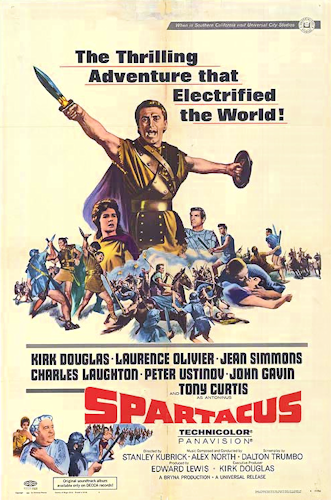
Spartaküs

Spartacus

Movie · 1960 · 15 people

Kirk Douglas produced Spartacus and took the title role himself, with Stanley Kubrick directing this 1960 American epic historical drama. At about 198 minutes, it became Universal's highest-grossing film to date on its release. It won four Academy Awards, including Best Supporting Actor for Peter Ustinov, and the Golden Globe for Best Drama. In 2017 it entered the United States National Film Registry.

The story draws on the Third Servile War of 73-71 BC. Sold into slavery and trained at a gladiator school, Spartacus sees the senator Crassus's (Laurence Olivier) unethical side after games held in his honour and starts a revolt. His slave army marches north through Italy and defeats Roman legions. Jean Simmons plays Spartacus's fictional wife Varinia, Peter Ustinov the school owner Batiatus, Charles Laughton the senator Gracchus, and Tony Curtis the slave Antoninus.

Dalton Trumbo wrote the screenplay from Howard Fast's 1951 novel. Douglas's company Bryna Productions removed director Anthony Mann soon after shooting began and brought in Kubrick, who had worked with Douglas on Paths of Glory; it is the only film where Kubrick lacked full artistic control. Douglas's public naming of the blacklisted Trumbo as writer helped end the Hollywood blacklist.

DirectorStanley Kubrick
Production companyBryna Productions

Reactions

You can pick up to 3 reactions.

Cast

Only cast members with a profile on this site are listed.
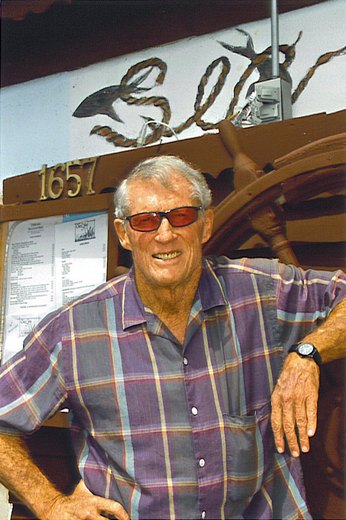
Brad Harris Brad Harris Actor · died at 84 Gordon Mitchell Gordon Mitchell Actor · died at 80 Kirk Douglas Laurence Olivier Jean Simmons Charles Laughton Peter Ustinov Tony Curtis Nina Foch Herbert Lom John Ireland John Dall Charles McGraw Harold J. Stone Woody Strode
Through different eyes

Cinephile Looks at script, editing and directing choices; keeps a distance from formula films.

Spartacus sits oddly in Kubrick's filmography: it is the only film where he lacked full artistic control. With Anthony Mann removed soon after shooting began and the project shaped by its producer and star, Kirk Douglas, it is better read as a star vehicle than as an auteur's work. That is not a flaw; Dalton Trumbo's screenplay and a cast including Olivier, Laughton and Ustinov carry the classic conventions of the epic with solid craft. But anyone looking for the personal signature of Kubrick's later films will find a more traditional Hollywood narrative here.

History & Society Lens Asks about the period, the social background and what the work reflects.

The film draws on the Third Servile War of 73-71 BC, so it depicts a real uprising against slavery, though it dramatises it through fictional characters such as Varinia. What is most striking is how the film's own history mirrors its subject: Douglas publicly naming the blacklisted Dalton Trumbo as screenwriter helped bring the Hollywood blacklist to an end. That a story about freedom should be remembered alongside a stand against the pressures of its own day is a meaningful coincidence. Watching ancient Rome, one can also read something about 1950s America.

Action & Thriller Fan Puts pace, tension and set pieces first; little patience for slow drama.

A gladiator school, a slave army, victories over Roman legions: on paper, an action feast. But this is not like today's fast-paced epics. It is very long and moves at the measured pace of classic Hollywood spectacle, with as much talk as swordplay. If you are ready to take in a large-scale historical saga slowly, it pays off; if you want speed, it may test you.

These are not reader reviews: they are short editorial takes written from different viewer perspectives with AI assistance. Reader reviews are below.

Reviews (0)

Log in Log in to write a review.

Comments