Phantomschmerz

Phantom Pain (Phantomschmerz) (translated)

Movie · 2009 · 15 people

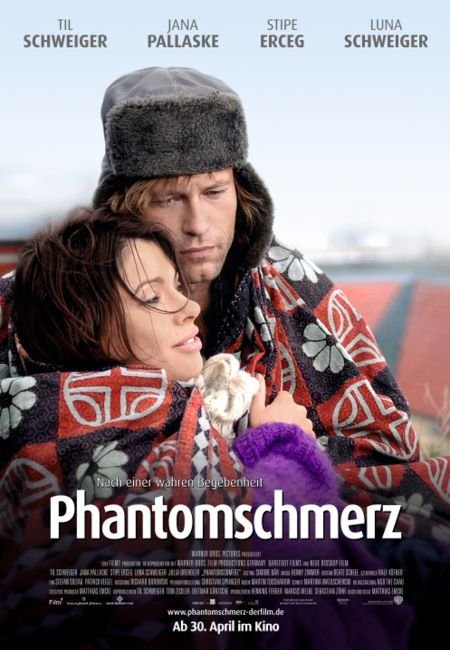
Written and directed by Matthias Emcke, Phantomschmerz (Phantom Pain in English, Acının Hayaleti in Turkish) dates from 2009 as a German film. Classed as a romantic drama, it looks at the story of an urban adventurer forced to take stock of his life, thoughtfully but optimistically. The lead is shared by Til Schweiger, known from Quentin Tarantino's Inglourious Basterds, with Jana Pallaske and Stipe Erceg. It runs about 98 minutes.

Schweiger's Marc is handsome, charming and well educated, a liar who enchants women. When he is not doing odd jobs he roams the roads on his motorcycle. He is always broke, breaks hearts and takes responsibility for nothing, yet nobody can really be angry at him, not even his daughter Sarah, born of a long failed relationship. A hit-and-run driver costs him his left leg. Straight out of hospital he returns to his old life of jokes and flirting as if nothing had happened, trying to forget what fate has done to him, until he meets Nika (Pallaske) and falls in love. Antje Traue plays Anja and Stipe Erceg Alexander; the cast also includes Luna Schweiger and Alwara Höfels.

The film premiered in Berlin on 20 April 2009 and opened in Germany on 30 April through Warner Bros. Pictures. Martin Todsharow composed the music.

DirectorMatthias Emcke

Reactions

You can pick up to 3 reactions.

Cast

Only cast members with a profile on this site are listed.

Julia Brendler Julia Brendler Actor · 51 years old Kida Khodr Ramadan Kida Khodr Ramadan Actor · 50 years old Til Schweiger Jana Pallaske Stipe Erceg Luna Schweiger Alwara Höfels Carina Wiese Richard Sammel Sönke Möhring Antje Traue Stephan Grossmann Ellenie Salvo González Gode Benedix Vijessna Ferkic

Through different eyes

Cinephile Looks at script, editing and directing choices; keeps a distance from formula films.

Matthias Emcke's film uses a familiar dramatic template: the irresponsible but charming man shaken by an accident and forced to face himself. The interesting part of the script is Marc going back to his old life after the loss as if nothing had happened; it takes denial seriously as a character trait. But rather than digging deeper into that denial, the film ties his change to a love story, and that is where the risk of leaning on the easy resolution of romantic drama appears. The wide Cinemascope frame gives the road and motorcycle imagery room to breathe; visually it is a careful piece of work. Its thoughtful but optimistic tone will feel reassuring to some and too soft to others.

History & Society Lens Asks about the period, the social background and what the work reflects.

The film sets the lifestyle of an urban, free-spirited man who avoids commitment against the fragility of life. Odd jobs, constant lack of money and running from responsibility show the price of the footloose life that big cities tend to romanticise. Fatherhood matters here too: that even his daughter Sarah can't really be angry with him says something about how easily the people around him forgive his irresponsibility. Treating the loss of a leg mainly as a tool for the character's inner change, though, looks like a choice that never takes up disability on its own terms.

Family Viewer Asks whether the whole household can watch it; cares about humour and heart.

A father, his daughter and a life changed by an accident: the subject is the kind a family could talk about. But this is a grown-up drama. Flirting, relationship troubles and the weight of losing a leg are front and centre. It is not for young children; older teens and adults are the better audience. It carries a hopeful message about responsibility and getting back on your feet.

These are not reader reviews: they are short editorial takes written from different viewer perspectives with AI assistance. Reader reviews are below.

Reviews (0)

Log in Log in to write a review.

Comments