People in Luck

People in Luck (Les Veinards)

Movie · 1963 · 8 people

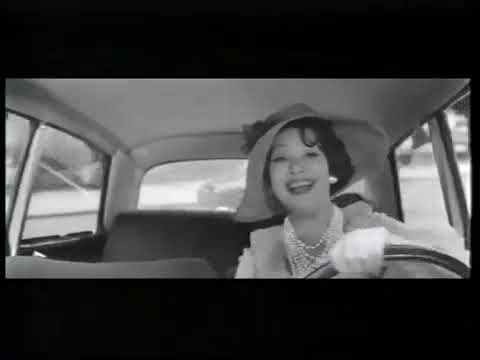
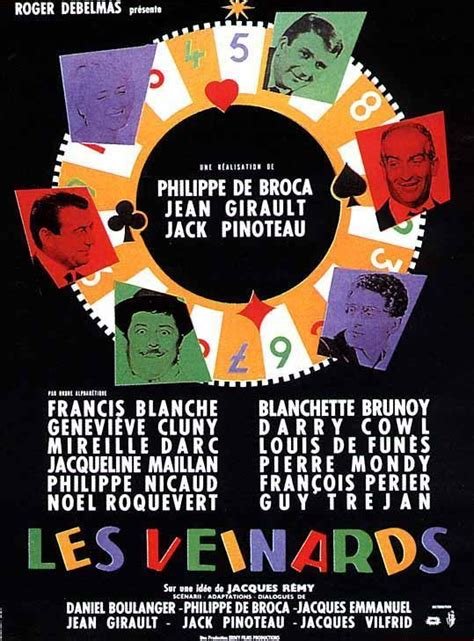
Built as an anthology of five short sketches, People in Luck (French: Les Veinards) came out in 1963 as a French comedy. The hero of each episode is someone who has just won the top prize in one lottery or another, and the film looks at what that windfall does to five different lives. Three directors share the credit: Philippe de Broca, Jean Girault and Jack Pinoteau.

The cast list includes France Anglade, Jean-Claude Brialy, Darry Cowl, Jean Lefebvre, Mireille Darc and Jacqueline Maillan. Louis de Funès, uncredited on the billing, plays the lead in the final segment. The stories run separately; what they share is a windfall that turns its winner's life upside down. The screenplay is credited to Daniel Boulanger, with Jacques Vilfrid and Jean Girault also named among its writers.

The film was shot in 1962, opened on 26 April 1963 and runs about 96 minutes. Abroad it was known by several names: The Lucky in English-speaking countries, Die Glückspilze or Fünf Glückspilze in West Germany, I fortunati in Italy, Los afortunados in Spanish and Schastlivchiki in the Soviet Union.

DirectorPhilippe de Broca, Jean Girault, Jack Pinoteau

Reactions

You can pick up to 3 reactions.

Cast

Only cast members with a profile on this site are listed.

Jean-Claude Brialy Jean-Claude Brialy Stage actor · died at 74 Darry Cowl Darry Cowl Stage actor · died at 80 France Anglade Louis de Funès Mireille Darc Jean Lefebvre Philippe de Broca Jacqueline Maillan

Through different eyes

Cinephile Looks at script, editing and directing choices; keeps a distance from formula films.

An anthology of five sketches shared among three directors is open to unevenness by nature: even if the segments share a theme, pace, tone and sense of humour can change from one to the next. Seeing comic sensibilities as different as Philippe de Broca's and Jean Girault's in one frame is interesting in itself for anyone curious about film history. Louis de Funès, uncredited, leading the final segment is a small discovery for his fans. But the known weakness of the sketch format applies here too: independent stories cannot build cumulative dramatic momentum, and the film looks less like a unified work than a collection gathered around a shared idea.

History & Society Lens Asks about the period, the social background and what the work reflects.

Winning the top prize in a lottery is a telling dream for early-1960s France: in years of post-war recovery and a rising consumer society, sudden money looks like the shortest path to changing an ordinary life. By looking at five separate lives, the film spreads that dream across different corners of society rather than pinning it on a single hero. The idea that a windfall turns its winner's life upside down is a light reminder that luck is not the same thing as happiness. In that sense the film is an entertaining source for looking at the period's relationship with money.

Family Viewer Asks whether the whole household can watch it; cares about humour and heart.

The premise is light and easy for anyone to follow: people who win the jackpot and how the money turns their lives upside down. Because it is made of separate short stories, it is easy to take breaks on a family evening, and it is a nice excuse to talk with kids about money and luck. Still, this is an old French comedy made for adults, so take a look at one segment yourself before putting it on with children.

These are not reader reviews: they are short editorial takes written from different viewer perspectives with AI assistance. Reader reviews are below.

Reviews (0)

Log in Log in to write a review.

Comments