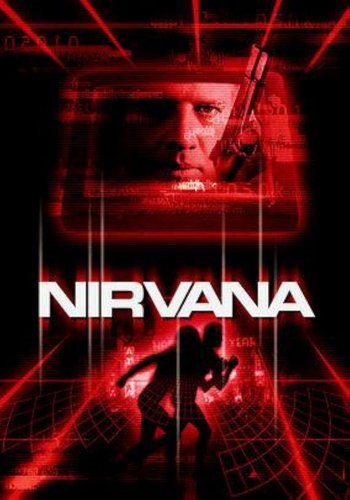
Nirvana

Nirvana

Movie · 1997 · 15 people

Gabriele Salvatores is the director of Nirvana, an Italian cyberpunk science fiction film from 1997. Shot in Italian as a co-production of Italy, France and the United Kingdom, it runs about 113 minutes and mixes science fiction with dystopian and dramatic elements. Screened out of competition at the 1997 Cannes Film Festival, it is regarded as a classic work of the cyberpunk genre.

The story centers on Jimi, a game designer who finds out that Solo, the hero of the virtual reality game he has built, has gained consciousness because of a computer virus. Able to feel everything, even death, Solo asks his creator to end his existence. Jimi races to wipe Solo from the company's servers before the game goes on sale, while also going after his wife Lisa, who has left him.

The leads are Christopher Lambert, Diego Abatantuono, Sergio Rubini and Stefania Rocca, with Emmanuelle Seigner, Claudio Bisio, Silvio Orlando, Antonio Catania, Gigio Alberti, Paolo Rossi and Amanda Sandrelli also in the cast, and Haruhiko Yamanouchi plays the psychologist Okasama Starr. Pino Cacucci and Salvatores wrote the screenplay together. The film opened in German cinemas on August 21, 1997.

DirectorGabriele Salvatores

Reactions

You can pick up to 3 reactions.

Cast

Names without a link have no profile here yet.

Haruhiko Yamanouchi Haruhiko Yamanouchi Film actor · 80 years old Psychologist Okasama Starr Christophe Lambert Diego Abatantuono Stefania Rocca Emmanuelle Seigner Gigio Alberti Claudio Bisio Antonio Catania Silvio Orlando Antonello Grimaldi Ugo Conti Paolo Rossi Sergio Rubini Amanda Sandrelli Renato Sarti

Through different eyes

AI-assisted editorial takes written from different viewer perspectives. They are not reader reviews; those are below.

Action & Thriller Fan Puts pace, tension and set pieces first; little patience for slow drama.

A game character who has gained consciousness and a deadline to wipe him from the servers: the premise is built for a great thriller. The cyberpunk atmosphere is dark and strange enough for genre fans too. But the film would rather think about the idea than run with it, and the race against time is less breathless than you'd expect. Don't expect a fast cyber-thriller; expect a slow-burning dystopia.

Cinephile Looks at script, editing and directing choices; keeps a distance from formula films.

Moving into cyberpunk, a genre European cinema rarely tackles, Gabriele Salvatores puts the idea first in Nirvana instead of joining Hollywood's effects race. A game hero, Solo, asking his creator to let him die is a bold starting point that treats the bond between maker and made at a philosophical level. The trouble is that the script adds a second line to this core, Jimi going after the wife who left him, and where the two strands should feed each other, they sometimes break each other's rhythm. Still, the dystopian atmosphere and the attempt to read genre conventions through a Mediterranean sensibility explain why it is remembered as a genre classic. Flawed but ambitious.

History & Society Lens Asks about the period, the social background and what the work reflects.

Nirvana carries the anxieties of a time when the internet and virtual reality games were only just entering daily life. It brings two questions to the fore: if a digital being can suffer, what do we owe it, and is a product a company is about to sell worth more than the consciousness inside it? The rush to wipe the game before release also hints at an industry where creativity answers to the commercial calendar. Seen today, amid debates on artificial intelligence and digital ethics, the film seems to have an intuition that reaches beyond its own time. Its dated technical details do not make the question any less current.

Reviews (0)

Log in Log in to write a review.

Comments