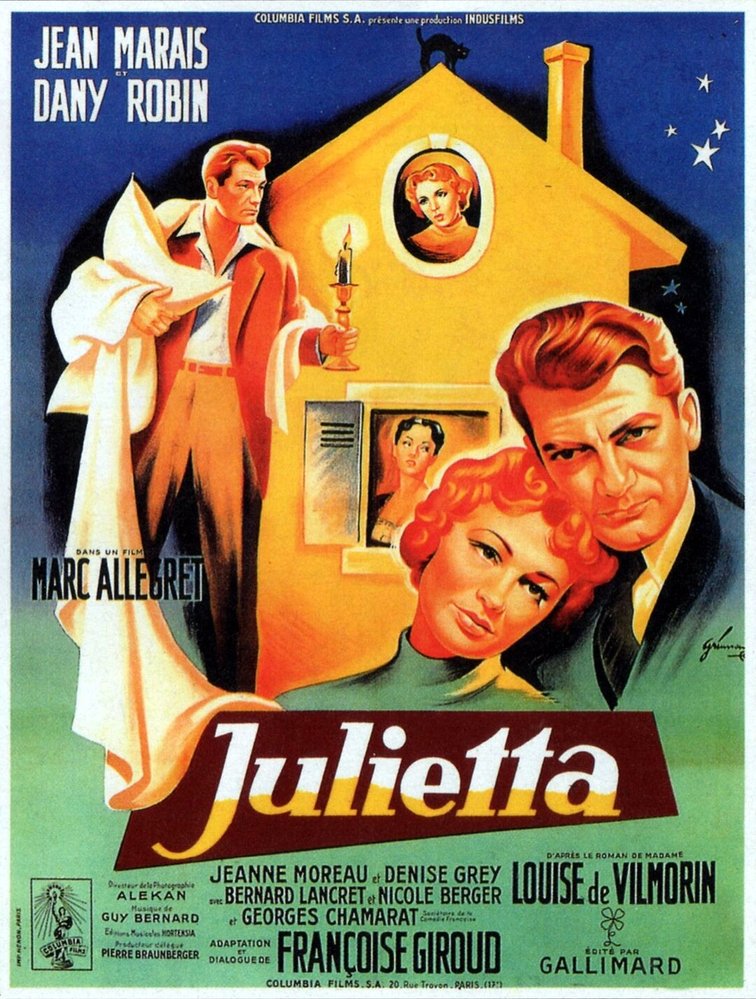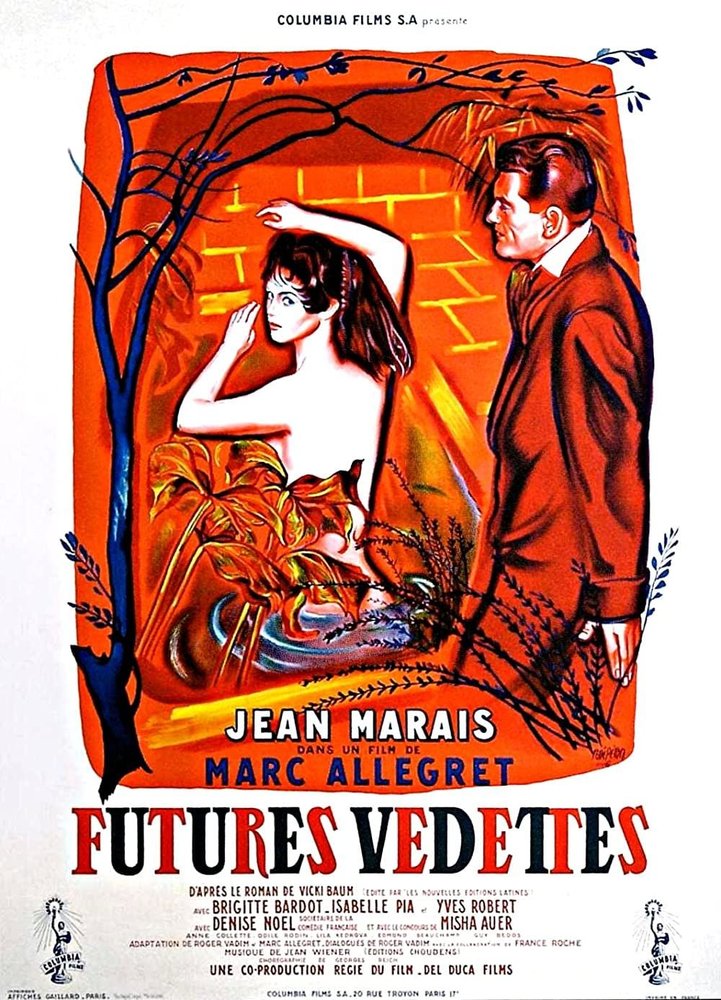
Futures Vedettes

School for Love (Futures Vedettes)

Movie · 1955 · 15 people

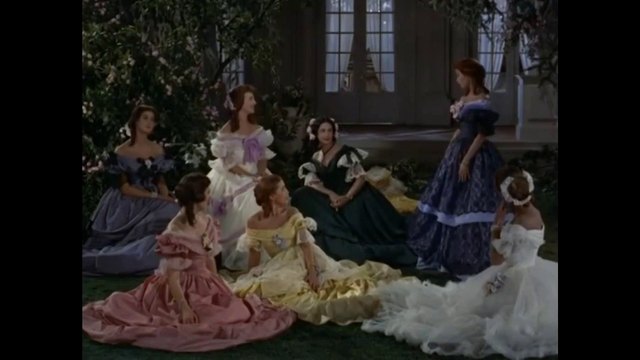
Marc Allégret directed Futures Vedettes, a 1955 French drama known in English as School for Love. Adapted from a novel by Vicki Baum, its screenplay was prepared by Allégret together with Roger Vadim and France Roche. Brigitte Bardot and Jean Marais share the leading roles, and the film comes from the early part of Bardot's career. Besides drama, it is also classed as romance and comedy.

The story is set in an art school. Between singing, dance and piano lessons, the students wrestle with the anxieties of growing up. Two voice students fall for their singing teacher, but he is married, and their unreturned feelings unsettle daily life at the school. Besides Bardot and Marais the cast includes Mischa Auer, Mylène Demongeot, Daniel Emilfork, Lila Kedrova, Yves Robert, Odile Rodin, Andréa Parisy, Anne Collette, Denise Noël and Edmond Beauchamp.

It was shot at the Franstudio in Saint-Maurice, Val-de-Marne. Jean Wiener composed the music, and the film runs about 96 minutes. Abroad it was released under different titles: Joy of Living or School for Love in the U.S., Sweet Sixteen in the U.K. and Reif auf jungen Blüten in West Germany.

DirectorMarc Allégret

Reactions

You can pick up to 3 reactions.

Cast

Only cast members with a profile on this site are listed.
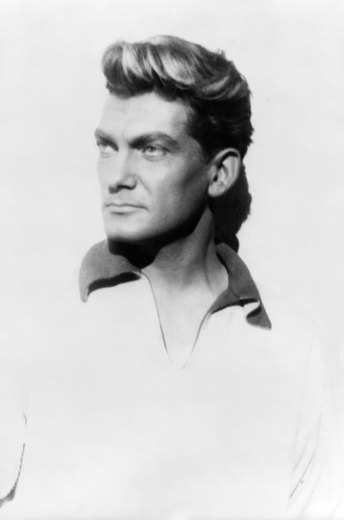
Jean Marais Jean Marais Actor · died at 84 Edmond Beauchamp Actor · died at 85 Brigitte Bardot Mischa Auer Mylène Demongeot Daniel Emilfork Lila Kedrova Yves Robert Odile Rodin Roger Vadim Isabelle Pia Andréa Parisy Anne Collette Danièle Heymann Denise Noël
Through different eyes

Cinephile Looks at script, editing and directing choices; keeps a distance from formula films.

Futures Vedettes is a film where names who would later leave their mark on French cinema cross paths: Marc Allégret directing, Roger Vadim on the script, and Brigitte Bardot early in her career. The art school, with its singing, dance and piano lessons, offers a visually and musically rich backdrop. But the film seems unable to settle on a tone between drama, romance and comedy, and the story of unrequited attachment risks dissolving into the school's daily routine. The novel's material never quite settles into a single point of view in the hands of a three-person writing team. Today it is interesting mainly as an early document of a generation of actors and writers.

History & Society Lens Asks about the period, the social background and what the work reflects.

The 1950s French art school is where the film's young people, stepping into adulthood, search for both talent and identity. Seen from today, the most striking thing is how the teacher-student relationship is handled: an unrequited attachment to a married teacher was often treated as a romantic theme in films of that era, whereas today it is impossible not to read the same situation in terms of power and boundaries. The film frames young women's dreams of the stage as a matter of the heart as much as of career, which makes it a good window onto the roles its time assigned to women.

Family Viewer Asks whether the whole household can watch it; cares about humour and heart.

Art school, singing and dancing: at first glance it looks like a film the whole household could watch. But at the heart of the story is the students' attachment to a married teacher, which is not a subject for young children. Watched with teenagers, it can be a good opening for a talk about boundaries between teachers and students. Its old-fashioned storytelling also makes it better suited to patient adults.

These are not reader reviews: they are short editorial takes written from different viewer perspectives with AI assistance. Reader reviews are below.

Reviews (0)

Log in Log in to write a review.

Comments