După dealuri

Beyond the Hills (După dealuri)

Movie · 2012 · 11 people

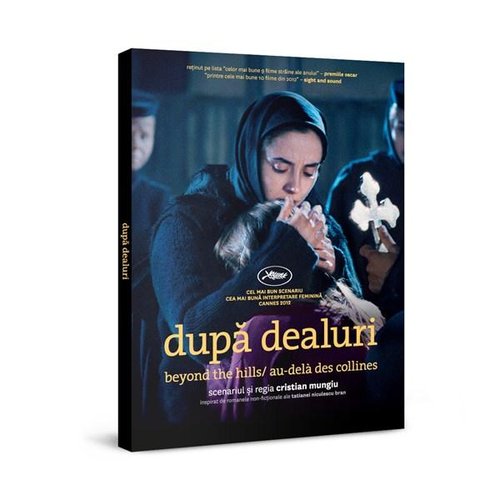
Cristian Mungiu, known worldwide for the Palme d'Or winner 4 Months, 3 Weeks and 2 Days, wrote and directed După dealuri (Beyond the Hills; in Turkey Tepelerin Ardında), a 2012 Romanian-French-Belgian drama. It premiered at Cannes on 19 May 2012, where Mungiu won Best Screenplay and Cosmina Stratan and Cristina Flutur shared Best Actress. Romania chose it for the 85th Academy Awards; it reached the shortlist but was not nominated.

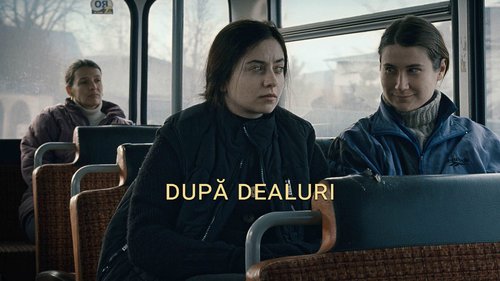
The story follows Alina and Voichița, two young women who grew up in the same orphanage and went through hard experiences there. After they parted, Voichița moved to Germany while Alina took refuge in an Orthodox convent in Romania. Struggling with depression and loneliness, Voichița returns to see her old friend and take her away to a new life, only to find something unexpected at the convent. Cristina Flutur and Cosmina Stratan star, with Valeriu Andriuță, Dionisie Vitcu, Luminița Gheorghiu and Teodor Corban in the cast.

The screenplay draws on Tatiana Niculescu Bran's non-fiction books, about the 2005 exorcism case at the Tanacu monastery in Vaslui County. It was filmed in Câmpina, Prahova County. The film runs about 150 minutes and opened in Belgium and France on 21 November 2012 and in Turkey on 8 February 2013.

DirectorCristian Mungiu
Beyond the Hills (După dealuri)

Reactions

You can pick up to 3 reactions.

Cast

Only cast members with a profile on this site are listed.

Cristina Flutur Cristina Flutur Actor · born 1978 Cosmina Stratan Dionisie Vitcu Luminiţa Gheorghiu Teodor Corban Ion Sapdaru Cerasela Iosifescu Valeriu Andriuta Tania Popa Gheorghe Ifrim Katia Pascariu

Through different eyes

Cinephile Looks at script, editing and directing choices; keeps a distance from formula films.

Known for 4 Months, 3 Weeks and 2 Days, Mungiu again chooses a distant, patient style that leaves judgement to the viewer. The Cannes screenplay prize is deserved: the film builds the two women's shared past and mutual dependence not through long explanations but through small tensions between them. The scenes between the two actresses who shared the acting prize are its load-bearing column. My reservation is about length: the running time aims for a deliberate weight, yet in my view the narrative at times stretches further than it needs. A tighter edit could have made the same impact sharper.

History & Society Lens Asks about the period, the social background and what the work reflects.

The film tells a real exorcism case without turning it into sensation, from a place that questions the conditions that produced it. The paths of two women raised in the same orphanage offer a comparison of how institutions shape people: one seeks a place by emigrating, the other by taking refuge in a convent. Loneliness, depression and lack of protection show the limits of the belonging promised by both migration and religious community. In my view Mungiu does not readily declare anyone a villain, and that turns the film into a portrait of a society where the line between faith and care blurs.

Family Viewer Asks whether the whole household can watch it; cares about humour and heart.

This is not one to watch with children or teenagers. It starts from a real exorcism case and deals with heavy subjects such as depression and loneliness. It is long and slow, and it asks for patience. For adults who like serious drama it can be a strong choice, but it does not suit a relaxed evening with the whole household.

These are not reader reviews: they are short editorial takes written from different viewer perspectives with AI assistance. Reader reviews are below.

Reviews (0)

Log in Log in to write a review.

Comments