Devil in the Flesh

Devil in the Flesh (Le Diable au corps)

Movie · 1947 · 3 people

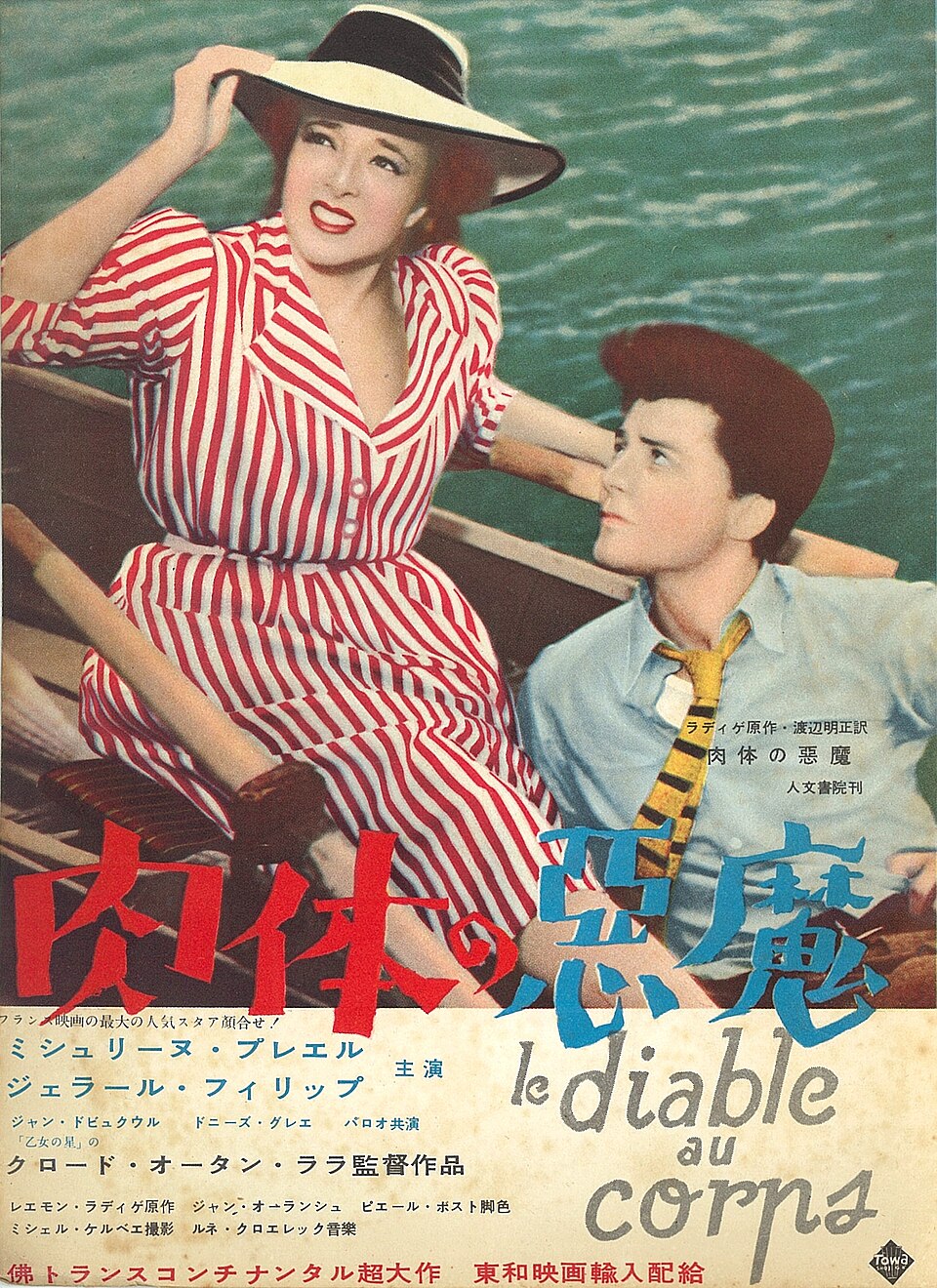
Claude Autant-Lara directed the 1947 French romantic drama Le Diable au corps (Devil in the Flesh), based on Raymond Radiguet's 1923 novel of the same name. Autant-Lara, Jean Aurenche and Pierre Bost wrote the script together. It was shot in black and white, runs about 110 minutes and is in French.

Like the novel before it, the film caused a scandal on release because of its risky subject, yet it also drew many positive reviews abroad and was named among the National Board of Review's top ten films of the year. In Germany it was shown as Stürmische Jugend or Teufel im Leib, in Greece as Flogismena Niata. The leads are Micheline Presle, as Marthe Grangier, and Gérard Philipe. The cast also includes Jean Debucourt as Edouard Jaubert, Denise Grey, Jacques Tati as an officer, Richard Francoeur, Palau and Jean Varas, with Albert Rémy, Edmond Beauchamp and Jeanne Pérez in smaller roles.

Filming took place at the Boulogne and Neuilly studios and on location around the city. The sets were designed by art director Max Douy.

DirectorClaude Autant-Lara

Reactions

You can pick up to 3 reactions.

Cast

Only cast members with a profile on this site are listed.

Through different eyes

Cinephile Looks at script, editing and directing choices; keeps a distance from formula films.

Bringing Raymond Radiguet's novel to the screen, Le Diable au corps opts for a restrained, classical style. The script by Autant-Lara, Jean Aurenche and Pierre Bost makes for a solid literary adaptation, and the black-and-white photography and Max Douy's sets blend the scenes shot at the Boulogne and Neuilly studios with the location work. The performances of Micheline Presle and Gérard Philipe opposite each other carry the film's emotional weight. At about 110 minutes it is well balanced, yet a film that caused a scandal on release now looks rather too dignified, never quite escaping the respectful distance of a literary adaptation. Spotting Jacques Tati in a small role as an officer is a nice surprise for film buffs.

History & Society Lens Asks about the period, the social background and what the work reflects.

That Le Diable au corps caused a scandal in 1947 says as much about the France of its day as about the film itself. Raymond Radiguet's novel, published in 1923, had met the same reaction, which suggests attitudes to its daring subject had hardly softened in twenty-four years. Meanwhile the positive reviews abroad and a place on the National Board of Review's top ten of the year show how differently moral boundaries were drawn from one country to another. Its German release as Stürmische Jugend, meaning "stormy youth", underlines how closely the subject was tied to youth.

Family Viewer Asks whether the whole household can watch it; cares about humour and heart.

This film caused a scandal on release because of its subject, just as the novel did. That alone is reason enough to think twice before a family viewing. It does not look suitable for children; if teenagers will watch, it is best for an adult to check it first. It is black and white and runs about 110 minutes. A better pick for adults who enjoy old French films.

These are not reader reviews: they are short editorial takes written from different viewer perspectives with AI assistance. Reader reviews are below.

Reviews (0)

Log in Log in to write a review.

Comments