Shaft's Big Score

Shaft's Big Score

Movie · 1972 · 8 people

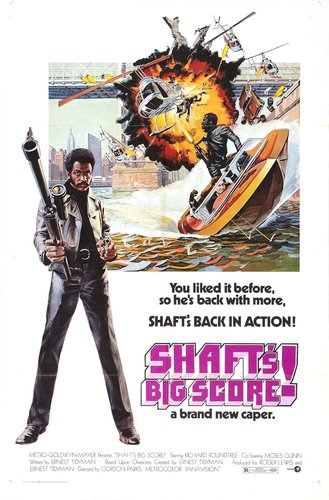
Shaft's Big Score! is a 1972 American blaxploitation film. The second entry in the series about the private detective John Shaft, it again stars Richard Roundtree in the title role. The story is set in New York. The film is based on the novel of the same name by Ernest Tidyman and carries the Metro-Goldwyn-Mayer name.

Alongside Roundtree, Moses Gunn as Bumpy Jonas and Drew Bundini Brown as Willy return from the first film. Joseph Mascolo plays Gus Mascola, Julius Harris plays Bollin and Joe Santos plays Pascal, with Kathy Imrie and Rosalind Miles also in the cast.

Gordon Parks directs again and Tidyman again wrote the script. The cinematographer is Urs Furrer. Isaac Hayes, who scored the first film, turned down the offer to do this one and contributed only a single song, so Parks, himself a musician, composed and performed the music. Its budget was more than three times that of its predecessor. The series continued a year later with Shaft in Africa.

DirectorGordon Parks
Production companyMetro-Goldwyn-Mayer

Reactions

You can pick up to 3 reactions.

Cast

Names without a link have no profile here yet.

Cihangir Ghaffari Cihangir Ghaffari Actor · 86 years old Jerry Richard Roundtree Moses Gunn Drew Bundini Brown Joseph Mascolo Julius Harris Joe Santos Gordon Parks

Also in the cast: Kathy Imrie, Rosalind Miles

Through different eyes

AI-assisted editorial takes written from different viewer perspectives. They are not reader reviews; those are below.

Action & Thriller Fan Puts pace, tension and set pieces first; little patience for slow drama.

Tough detective John Shaft is back, this time with more than three times the first film's budget, which is a real chance to scale up the action. The first film's charm is not quite recaptured, and the sequel visibly carries the weight of being a follow-up. The neo-noir mood, the New York streets and the crime underworld remain exactly the mix a genre fan wants.

Cinephile Looks at script, editing and directing choices; keeps a distance from formula films.

The film's most interesting side is behind the camera: when Isaac Hayes turned down the offer, Gordon Parks composed and performed the music himself. A director taking charge of sound as well as image is a degree of authorial control rarely seen in a genre picture. Given Urs Furrer's cinematography and the bigger budget, it is no surprise that the production values and the direction stand out. But that gain has a cost: the first film's identity was defined largely by its music, and with that sound gone the series has to redefine itself. That is where to look for why this is a more polished but less distinctive sequel.

History & Society Lens Asks about the period, the social background and what the work reflects.

That Metro-Goldwyn-Mayer gave a blaxploitation sequel more than three times the first film's budget shows how valuable a Black private detective had become to a major studio in the early 1970s. The world drawn from Ernest Tidyman's novel reads the New York of the time through its crime world and its streets, which gives it value as a record of the city's popular image in those years. The genre's heavy reliance on crime and violence clichés deserves a critical reading today.

Reviews (0)

Log in Log in to write a review.

Comments