Police Python 357

Police Python 357

Movie · 1976 · 12 people

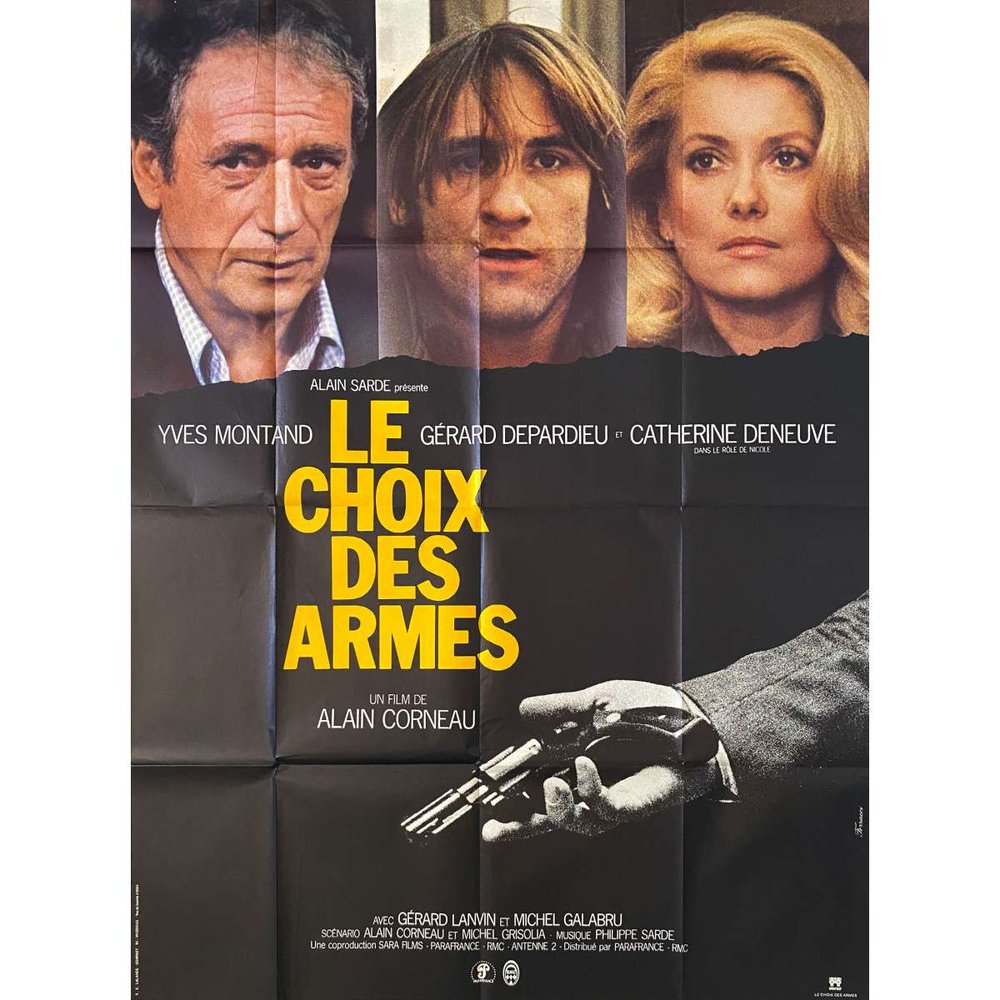
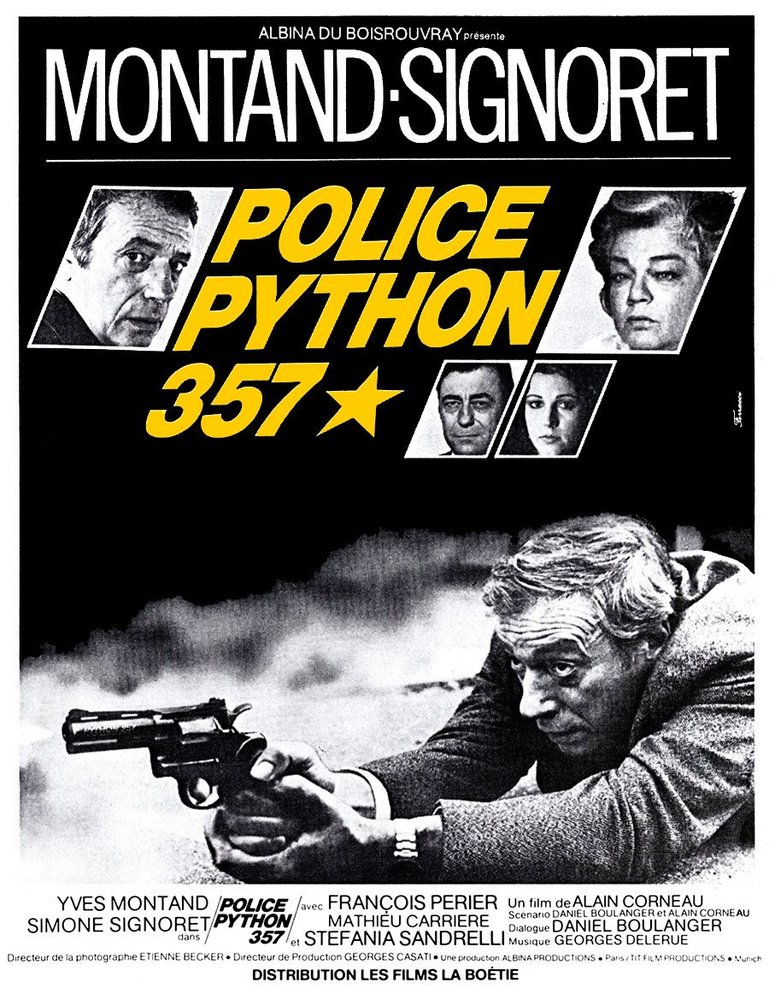
Alain Corneau wrote and directed the 1976 French and West German crime thriller Police Python 357. In Germany it is sometimes billed as Police Python 357 – Ein Mann im Alleingang, and in some countries it is known as The Case Against Ferro. Shot in French, it runs about 125 minutes and opened in France on 31 March 1976. Yves Montand plays the lead.

Alongside Montand, the cast includes Simone Signoret, François Périer and Stefania Sandrelli, with Mathieu Carrière, Vadim Glowna, Serge Marquand, Michel Ruhl, Alice Reichen, Claude Bertrand and Gabrielle Doulcet also among the performers. The title refers to the Colt Python revolver, which fires the .357 Magnum cartridge.

The story partly draws on Kenneth Fearing's 1946 novel The Big Clock, which Corneau combined with his own childhood experiences. The same novel had already been filmed in 1948, released in German as Spiel mit dem Tode, so Corneau's picture carries that older story into 1970s French crime cinema. Corneau wrote the screenplay with Daniel Boulanger. Albina du Boisrouvray produced the film and Georges Delerue composed the music.

DirectorAlain Corneau

Reactions

You can pick up to 3 reactions.

Cast

Only cast members with a profile on this site are listed.
François Périer François Périer Film actor · died at 82 Stefania Sandrelli Stefania Sandrelli Actor · 80 years old Yves Montand Simone Signoret Mathieu Carrière Vadim Glowna Serge Marquand Michel Ruhl Alice Reichen Claude Bertrand Gabrielle Doulcet Michel Such
Through different eyes

Action & Thriller Fan Puts pace, tension and set pieces first; little patience for slow drama.

The title comes straight from a gun, the Colt Python and its .357 Magnum round, which sets up expectations of a hard-edged cop movie. Yves Montand leads and the genre is crime thriller, so on paper everything is in place. But don't confuse the pace of seventies French crime films with today's action. It is a long film and may build its tension slowly rather than through explosions.

Cinephile Looks at script, editing and directing choices; keeps a distance from formula films.

Corneau's approach is intriguing: he takes Kenneth Fearing's 1946 novel The Big Clock, blends it with his own childhood experiences and carries a story already filmed in 1948 into 1970s French crime cinema. Writing the script with Daniel Boulanger, Georges Delerue's score and a cast of Montand, Signoret, Périer and Sandrelli show it was conceived as a serious auteur piece. For me the real question is whether so many different sources balance out in a single narrative; a structure that moves between adaptation, personal memory and genre rules can at times sink under its own weight. Still valuable for anyone curious about how the crime film changes shape in an auteur's hands.

History & Society Lens Asks about the period, the social background and what the work reflects.

The film is a good example of a story that travels across continents and decades: an American novel written in 1946, filmed once in 1948, then reinterpreted in 1976 as a French and West German co-production. That journey is an interesting case for thinking about how the same basic story takes on new context in different societies and periods. Corneau adding his own childhood memories is a moment where genre meets personal history. Even so, to grasp what the film says about its own time, it helps to know a little about European crime cinema of the seventies.

These are not reader reviews: they are short editorial takes written from different viewer perspectives with AI assistance. Reader reviews are below.

Reviews (0)

Log in Log in to write a review.

Comments