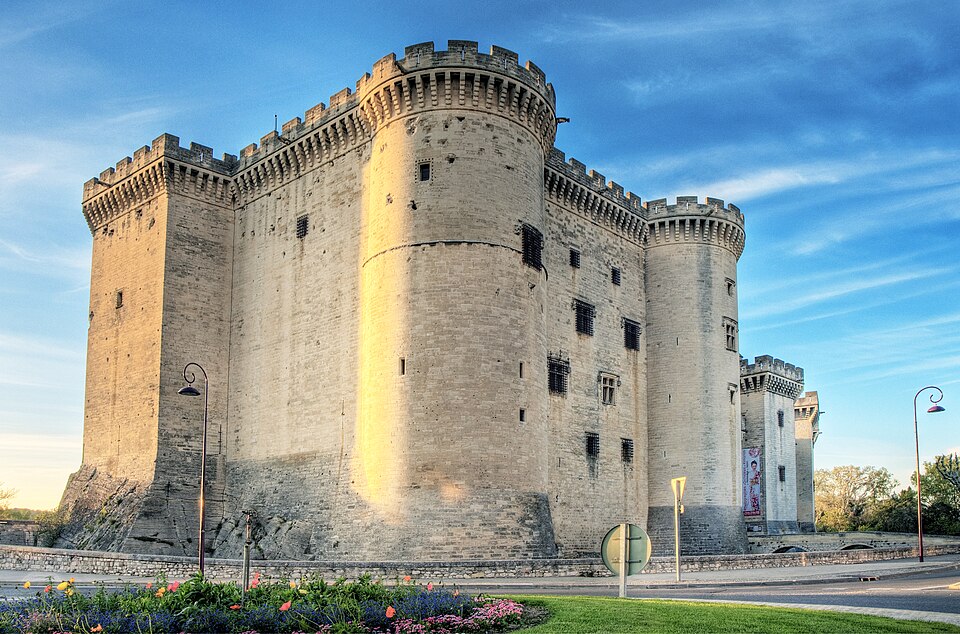
La Révolution française

La Révolution française

Movie · 1989 · 15 people

Made in 1989 for the 200th anniversary of the French Revolution, La Révolution française is a two-part historical drama. A co-production of France, Germany, Italy and Canada, it runs close to six hours, with a slightly longer cut prepared for television, and it was shot in French and English. It presents the Revolution as a process stretching over several years.

The first part, Les Années lumière, directed by Robert Enrico, begins with the events leading up to the calling of the Estates-General and ends with the storming of the Tuileries Palace on 10 August 1792. The second, Les Années terribles, directed by Richard T. Heffron, opens with Louis XVI and his family imprisoned in the Temple and follows the Terror to the execution of Robespierre. Historical figures such as Louis XVI, Danton, Robespierre and Desmoulins feature prominently; François Cluzet plays Camille Desmoulins. The cast also includes Klaus Maria Brandauer, Andrzej Seweryn, Christopher Lee and Claudia Cardinale.

The screenplay is by David Ambrose, Daniel Boulanger and Robert Enrico, with the historian Jean Tulard as historical adviser. Its budget of roughly 300 million francs made it one of the costliest European projects of its time, yet the film, made to accompany the bicentenary celebrations, was a commercial failure.

DirectorRobert Enrico, Richard T. Heffron

Reactions

You can pick up to 3 reactions.

Cast

Only cast members with a profile on this site are listed.
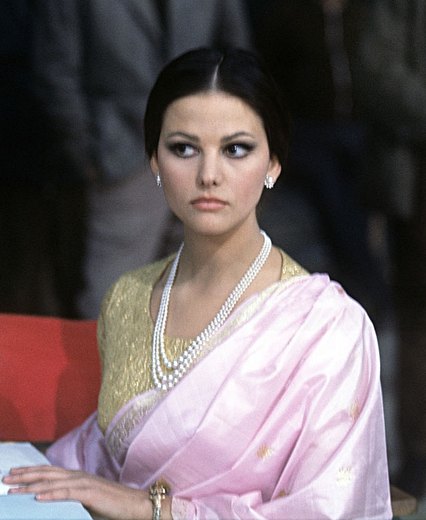
Claudia Cardinale Claudia Cardinale Actor · died at 87 Michel Galabru Michel Galabru Film actor · died at 93 Klaus Maria Brandauer Andrzej Seweryn François Cluzet Jean-François Balmer André Farwagi André Penvern Anne Létourneau Bruce Myers Bruno Raffaelli Christopher Lee Christopher Thompson Claude Aufaure Daniel Briquet
Through different eyes

History & Society Lens Asks about the period, the social background and what the work reflects.

It is notable that a production made for the Revolution's bicentenary also covers the Terror and the execution of Robespierre. For a film commissioned as part of a celebration, refusing to leave out the dark years in which the revolution consumed its own is a kind of honesty you would not expect from an official commemoration. The historian Jean Tulard's role as adviser is reassuring too. Even so, international co-productions like this tend to smooth over contested points to reach a wide audience, so how much space each figure gets, and through whose eyes the story is told, is worth questioning.

Cinephile Looks at script, editing and directing choices; keeps a distance from formula films.

The real test for a production on this scale is coherence. The two parts' titles, the years of light and the terrible years, announce a shift in tone from the start, and that split gives the story a natural dramatic arc. But two directors, two languages and four co-producing countries also bring a risk of uneven style, and the rhythm of the acting may shift between scenes shot in French and in English. A budget of about 300 million francs guarantees spectacle, yet the box-office failure suggests that grandeur alone was not enough to hold audiences through a story this long. Rewarding for patient viewers with an interest in history, an exhausting marathon for everyone else.

Family Viewer Asks whether the whole household can watch it; cares about humour and heart.

It could be a good resource for anyone who wants to watch with teenagers to back up history lessons. But both parts are long and will not fit into one evening, so it is easier taken one part at a time. Because the story reaches the Terror and its executions, it is not for young children. It suits high-school students and adults who enjoy history better.

These are not reader reviews: they are short editorial takes written from different viewer perspectives with AI assistance. Reader reviews are below.

Reviews (0)

Log in Log in to write a review.

Comments