La pasión turca

Turkish Passion (La pasión turca) (translated)

Movie · 1994 · 13 people

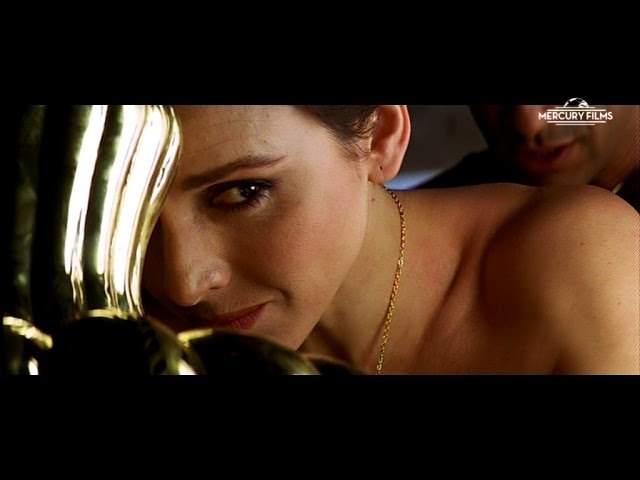
Antonio Gala’s widely read 1993 novel of the same name is the source of La pasión turca (The Turkish Passion), a 1994 Spanish erotic drama. Director Vicente Aranda wrote the screenplay together with Gala. Some describe it as an exploration of female sexual desire; the controversial film continues Aranda’s fascination with the dark side of love. Mario Camus was first considered as director, but Aranda made the film in the end. It runs about 112 minutes, with dialogue in Spanish and French.

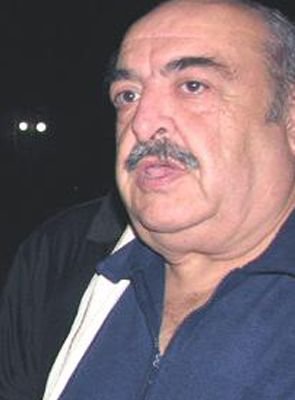
Ana Belén and Georges Corraface play the leads, with Silvia Munt, Loles León, Laura Mañá, Jordi Dauder, Claude Brosset and Ramon Madaula in the cast. The sequences set in Istanbul feature Turkish actors including Rasim Öztekin, Selçuk Uluergüven and Güzin Özipek. Andrés Vicente Gómez produced.

The film opened in Spain on 16 December 1994, reaching about 1.24 million viewers and grossing more than 3.7 million euros, which made it one of the biggest Spanish hits of the 1990s. It earned twelve Goya nominations in 1995, and José Nieto’s original score won the Goya for Best Original Score. It also took part in the 19th Moscow International Film Festival. A six-part 2024 Spanish-Turkish series inspired by the same novel is a separate production.

DirectorVicente Aranda

Reactions

You can pick up to 3 reactions.

Cast

Only cast members with a profile on this site are listed.

Rasim Öztekin Rasim Öztekin Actor · died at 62 Selçuk Uluergüven Selçuk Uluergüven Actor · died at 72 Ana Belén Georges Corraface Sílvia Munt Loles León Laura Mañá Jordi Dauder Claude Brosset Ramon Madaula Patrick Guillemin Helio Pedregal Güzin Özipek
Through different eyes

History & Society Lens Asks about the period, the social background and what the work reflects.

For a Turkish viewer, the most intriguing thing about the film is how Istanbul looks through the eyes of a Spanish novel and film. Familiar faces such as Rasim Öztekin, Selçuk Uluergüven and Güzin Özipek in the Istanbul sequences make that encounter even more curious. Using Turkish to describe a passion in the title recalls an old way of imagining the East as an exotic place of desire, and in my view it is worth watching with a critical eye. That the film is read as an exploration of a woman's sexual desire, and that it stirred controversy, shows how sensitive the subject was in its day. Reaching more than 1.2 million viewers in Spain is a measure of that interest.

Cinephile Looks at script, editing and directing choices; keeps a distance from formula films.

Aranda's film carries both the advantage and the risk of adapting a widely read novel together with its author: how far it achieves a truly cinematic transformation while staying faithful to Gala's text is open to question. The director's interest in the dark side of love continues here, with eroticism used as the main means of conveying the character's inner world. To my mind the film's weakness is that it surrenders to melodrama; the destructiveness of passion stays an intensity repeated from scene to scene instead of deepening the character's psychology. On the other hand, José Nieto's Goya-winning score gives the story a strong emotional backbone. Twelve Goya nominations show it was considered an important film in its day, yet seen from today it looks somewhat dated.

Family Viewer Asks whether the whole household can watch it; cares about humour and heart.

This is an erotic drama, so it is not one to watch with the family. Its story is built on a woman's passion and sexual desire. It is not suitable for children or teenagers, and it does not fit a shared family evening at all. The Istanbul scenes and the Turkish actors may spark curiosity, but this one is best left to adults.

These are not reader reviews: they are short editorial takes written from different viewer perspectives with AI assistance. Reader reviews are below.

Reviews (0)

Log in Log in to write a review.

Comments